West China Photonics Symposium 2026
December 4–6, 2026 | Chengdu, Sichuan, China
https://b2b.csoe.org.cn/meeting/WCPS2026.html
In recent years, the interdisciplinary convergence of optics and photonics, microelectronics, materials science and other disciplines has given rise to optoelectronic science and technology, a vibrant frontier field that serves as an important pillar of the modern information society and a key driver of scientific and technological innovation. The optoelectronics industry has now formed a vast industrial chain, powerfully driving the upgrading of traditional industries and the growth of emerging industries, and playing an important role in the national economy.
To promote the high-quality development of China’s optoelectronic industry and support the development of western China, the Chinese Society for Optical Engineering (CSOE), together with stakeholders from government, industry, academia, research institutes, finance, services and end users, will hold the 2026 West China Photonics Symposium in Chengdu, Sichuan Province, from December 4 to 6, 2026. Integrating conference, exhibition and hands-on experience, the symposium adopts a “1+9+N” framework and highlights its international vision, professionalism, high-end orientation and practical value. Focusing on cutting-edge optoelectronic technologies and their applications, it builds a cross-disciplinary industry-academia-research platform, deepens the optoelectronic industrial layout and international cooperation in western China, and contributes to building a hub for optoelectronic technology and industry in the region.
I. Conference Organizations (to be updated)
Sponsors
National Academy of Engineering (United States)
acatech – German National Academy of Science and Engineering
Australian Academy of Technology and Engineering (ATSE)
Chinese Society for Optical Engineering (CSOE)
SPIE – the International Society for Optics and Photonics
Optica (Advancing Optics and Photonics Worldwide)
European Photonics Industry Consortium (EPIC)
The Japan Society of Applied Physics
Organizers
Chinese Society for Optical Engineering (CSOE)
University of Electronic Science and Technology of China
Institute of Optics and Electronics, Chinese Academy of Sciences
The 29th Research Institute of China Electronics Technology Group Corporation
Co-Organizers
National University Science Park, University of Electronic Science and Technology of China
Laser Technology Committee, China Ordnance Society
Laser Branch, China Optics and Optoelectronics Manufacturers Association
Commonwealth Scientific and Industrial Research Organisation (CSIRO), Australia
National Manufacturing Institute Australia (NMIA)
Australia-China Advanced Materials and Manufacturing Association
Sichuan Provincial Society of Industrial Software
General Chair
Xiangang Luo, Institute of Optics and Electronics, Chinese Academy of Sciences
General Co-Chairs (in alphabetical order)
Lianghui Chen, Institute of Semiconductors, Chinese Academy of Sciences
Jianyu Wang, Shanghai Institute of Technical Physics, Chinese Academy of Sciences
Guobin Fan, China Academy of Engineering Physics
Jiubin Tan, Harbin Institute of Technology
Donglin Su, Beihang University
Yi Luo, Tsinghua University
Hongke Zhang, Beijing Jiaotong University
Xiaohu You, Southeast University
Jindong Li, China Academy of Space Technology
Jun Hu, University of Electronic Science and Technology of China
Executive Chairs (in alphabetical order)
Wei Chen, Southwest Institute of Technical Physics
Xiangyang Duan, ZTE Corporation
Yadong Jiang, University of Electronic Science and Technology of China
Ming Li, Institute of Semiconductors, Chinese Academy of Sciences
Jian Liu, Harbin Institute of Technology
Shilong Pan, Nanjing University of Aeronautics and Astronautics
Xiaopeng Shao, Xi’an Institute of Optics and Precision Mechanics, Chinese Academy of Sciences
Ping Shen, Southern University of Science and Technology
Guoqiang Tang, BOE Technology Group Co., Ltd.
Xiaoping Xie, Institute of Optics and Electronics, Chinese Academy of Sciences
Tao Zhou, The 29th Research Institute of China Electronics Technology Group Corporation
Arup Neogi, University of Electronic Science and Technology of China
Program Committee Chairs (in alphabetical order)
Bin Li, University of Electronic Science and Technology of China
Haizhi Song, Southwest Institute of Technical Physics
Xiaodi Tan, Fujian Normal University
Ling Tian, University of Electronic Science and Technology of China
Wei Wang, Xi’an Institute of Optics and Precision Mechanics, Chinese Academy of Sciences
Qionghua Wang, Beihang University
Weibo Wang, Harbin Institute of Technology
Jiang Wu, University of Electronic Science and Technology of China
Wenfu Zhang, Xi’an Institute of Optics and Precision Mechanics, Chinese Academy of Sciences
Huijie Zhao, Beihang University
Program Committee Members (in alphabetical order)
Dajian Cui, The 44th Research Institute of China Electronics Technology Group Corporation
Guoying Feng, Sichuan University
Houkun Liang, Sichuan University
Hanlin Qin, Xidian University
Tianzi Shen, Beihang University
Huiling Tai, University of Electronic Science and Technology of China
Libin Tang, Kunming Institute of Physics
You Wang, Southwest Institute of Technical Physics
Changlei Wang, Soochow University
Huikai Xie, Chongqing Microelectronics Research Institute, Beijing Institute of Technology
Shuming Yang, Xi’an Jiaotong University
Xiubin Yang, Changchun Institute of Optics, Fine Mechanics and Physics, Chinese Academy of Sciences
Baoli Yao, Xi’an Institute of Optics and Precision Mechanics, Chinese Academy of Sciences
II. Technical Tracks & Call for Papers (to be updated)
(A) Optoelectronics Frontier (OEFT)
OEFT1 – Novel Optoelectronic Materials and Devices
Scope: Optical fiber materials and devices; optoelectronic detection materials and devices; optoelectronic integrated materials and devices; optical metamaterials and devices; crystal materials and devices.
Track Chair:
Wenfu Zhang, Xi’an Institute of Optics and Precision Mechanics, Chinese Academy of Sciences
Co-Chairs (in alphabetical order):
Lei Bi, University of Electronic Science and Technology of China
Mingbo Pu, Institute of Optics and Electronics, Chinese Academy of Sciences
Baicheng Yao, University of Electronic Science and Technology of China
Fangfang Zhang, Xinjiang Technical Institute of Physics and Chemistry, Chinese Academy of Sciences
Track Secretary:
Guoxi Wang, Xi’an Institute of Optics and Precision Mechanics, Chinese Academy of Sciences
OEFT2 – Micro-Opto-Electro-Mechanical Systems
Scope: Design, fabrication, packaging, testing and reliability of micro-opto-electro-mechanical systems (MOEMS); cutting-edge applications in novel displays, satellite communications, all-optical switching, intelligent manufacturing, autonomous driving, artificial intelligence, virtual reality and situational awareness.
Track Chair:
Huikai Xie, Chongqing Microelectronics Research Institute, Beijing Institute of Technology
Co-Chairs (in alphabetical order):
Youliang Tian, Hisense Group
Shuailong Zhang, Beijing Institute of Technology
OEFT3 – Optoelectronic Detection and Sensing
Scope: To be announced.
Track Chair:
Libin Tang, Kunming Institute of Physics
Co-Chairs (in alphabetical order):
Hanlin Qin, Xidian University
Jun Wang, University of Electronic Science and Technology of China
Qingquan Xiao, Guizhou University
Shengyi Yang, Beijing Institute of Technology
OEFT4 – Ultrafast Optoelectronic Technologies
Scope: Ultrafast laser technologies; infrared spectral detection and imaging; on-chip integrated ultrafast light sources.
Track Chair:
Houkun Liang, Sichuan University
Co-Chairs (in alphabetical order):
Jinwei Zhang, Huazhong University of Science and Technology
Di Zhu, Agency for Science, Technology and Research (A*STAR), Singapore
Program Committee Members (in alphabetical order):
Huabao Cao, Xi’an Institute of Optics and Precision Mechanics, Chinese Academy of Sciences
Zhiyuan Huang, Shanghai Institute of Optics and Fine Mechanics, Chinese Academy of Sciences
NanXi Li, Agency for Science, Technology and Research (A*STAR), Singapore
Wenlong Tian, Xidian University
Sha Wang, Sichuan University
Han Wu, Sichuan University
Lu Xu, Huazhong University of Science and Technology
Track Secretary:
Bo Hu, Sichuan University
OEFT5 – Intelligent Optoelectronic Technologies
Scope: Intelligent data storage; intelligent neural networks; intelligent image analysis; intelligent laser manufacturing.
Track Chair:
You Wang, Southwest Institute of Technical Physics
Co-Chairs (in alphabetical order):
Hongwei Chen, Tsinghua University
Program Committee Members (in alphabetical order):
He Cai, Southwest Institute of Technical Physics
Kun Huang, East China Normal University
Xiaoxu Liu, Southwest Institute of Technical Physics
Sha Wang, Sichuan University
Track Secretary:
Jianing Shen, Southwest Institute of Technical Physics
OEFT6 – Advanced Quantum Technologies
Scope: Photonic quantum science; quantum communication; quantum computing; quantum precision measurement.
Track Chair:
Haizhi Song, Southwest Institute of Technical Physics
Co-Chairs (in alphabetical order):
Bo Jing, Southwest Jiaotong University
Program Committee Members (in alphabetical order):
Guangwei Deng, University of Electronic Science and Technology of China
Yun Long, Institute of Optics and Electronics, Chinese Academy of Sciences
Chengbing Qin, Shanxi University
Junfeng Wang, Sichuan University
Liang Xu, Nanjing University
Track Secretary:
Shihai Wei, Xihua University
OEFT7 – Optoelectronic Data Storage
Scope: To be announced.
Track Chairs:
Xiaodi Tan, Fujian Normal University
Yong Zhang, China Hualu Group Co., Ltd.
Jingyu Zhang, Huazhong University of Science and Technology
Program Committee Members (in alphabetical order):
Kaiwei Xia, University of Science and Technology of China
Ping Su, Tsinghua Shenzhen International Graduate School
Track Secretary:
Yongkun Lin, Fujian Normal University
(B) Optoelectronics + Display (OEDP)
Scope: To be announced.
Track Chair:
Tianzi Shen, Beihang University
Co-Chairs (in alphabetical order):
Jinkun Guo, Xidian University
Shufeng Lin, Beijing University of Technology
(C) Optoelectronics + Manufacturing (OEMF)
OEMF1 – Optoelectronic Technologies and Devices
Scope: Addressing the urgent demand for optoelectronic components in aerospace payloads and systems, this track focuses on key technologies covering the design of optoelectronic chips, optoelectronic devices and passive optical components, optoelectronic assembly and components, packaging and testing, and radiation tolerance, as well as their aerospace applications and the latest research progress in this field at home and abroad.
Track Chair:
Shuming Yang, Xi’an Jiaotong University
Co-Chairs (in alphabetical order):
Changcai Cui, China Jiliang University
Yunlong Zhang, Xi’an Institute of Applied Optics
Jinlong Zhu, Huazhong University of Science and Technology
Program Committee Members (in alphabetical order):
Xin Yuan, Westlake University
Guanghua Cheng, Northwestern Polytechnical University
Chunguang Hu, Tianjin University
Track Secretary:
Peirui Ji, Xi’an Jiaotong University
(D) Optoelectronics + Aerospace (OEAS)
OEAS1 – Aerospace Optoelectronic Chips and Devices
Scope: Optoelectronic chip technologies; optoelectronic device technologies; passive optical device technologies; optoelectronic assembly and component technologies.
Track Chair:
Dajian Cui, The 44th Research Institute of China Electronics Technology Group Corporation
Co-Chairs (in alphabetical order):
Chenggang Guan, Accelink Technologies Co., Ltd.
Track Secretary:
Peng Luo, The 44th Research Institute of China Electronics Technology Group Corporation
OEAS2 – Aerospace Optoelectronic Payloads
Scope: Satellite laser communication technologies; visible/infrared optical imaging and detection technologies; spectral imaging technologies.
Track Chair:
Wei Wang, Xi’an Institute of Optics and Precision Mechanics, Chinese Academy of Sciences
Co-Chairs (in alphabetical order):
Xiubin Yang, Changchun Institute of Optics, Fine Mechanics and Physics, Chinese Academy of Sciences
(E) Optoelectronics + Communications (OECT)
OECT1 – 6G Photonic Technologies
Scope: Novel DSP-free high-density coherent optical interconnects for AI and 6G; time-reversal and space-time focusing for coherent distributed antenna systems; coherent phase-modulated RF photonic links based on Costas or Sagnac loops; all-photonic, fully coherent, full-spectrum RF front-ends; high-linearity, high-dynamic-range coherent microwave photonic links for 6G; homodyne, heterodyne and self-coherent RF photonic links; coherent optical computing and photonic-AI integrated chip technologies for 6G; laser–millimeter-wave integrated coherent synthetic aperture technologies for the fusion of communication and sensing for 6G ISAC.
Track Chair:
Shilong Pan, Nanjing University of Aeronautics and Astronautics
Co-Chairs (in alphabetical order):
Ming Li, Institute of Semiconductors, Chinese Academy of Sciences
Xingjun Wang, Peking University
Baiqing Zong, MILPHOTON Semiconductor (Suzhou) Co., Ltd.
Xihua Zou, Southwest Jiaotong University
(F) Optoelectronics + Biomedicine (OEBM)
OEBM1 – Cutting-edge Optoelectronic Biomedical Technologies and Translation
Scope: 1. Innovations and applications of optical imaging technologies: super-resolution optical imaging, exploring approaches to break the diffraction limit of conventional optical microscopes; optical properties of biological tissues, analyzing properties such as scattering and absorption of different biological tissues to optimize imaging parameters and improve image quality. 2. Photonics in biomedical therapy: photodynamic therapy (PDT) and photothermal therapy (PTT), examining the chemical reactions or heat generated by photosensitizers under illumination at specific wavelengths to kill cancer cells or bacteria, together with their mechanisms, optimization strategies and clinical prospects; laser surgery and minimally invasive therapy, exploring the applications of laser technologies in surgery. 3. Optoelectronic detection in biomedicine: laser-induced breakdown spectroscopy (LIBS), examining its applications in elemental analysis of biological tissues. 4. Novel optoelectronic materials and devices for biomedicine: two-dimensional materials (e.g., graphene and transition-metal dichalcogenides) and flexible optoelectronic devices for biomedical sensors, wearable devices and other applications; photonic crystals and optical microcavities, exploring biosensors based on optical microstructures that exploit their unique optical properties for highly sensitive biomolecular detection.
Track Chair:
Guoying Feng, Sichuan University
Co-Chairs (in alphabetical order):
Gang Chen, Chongqing University
Pinghe Wang, University of Electronic Science and Technology of China
Fan Wang, Beihang University
Shizhou Wu, West China Hospital, Sichuan University
Program Committee Members (in alphabetical order):
Jinghua Han, Sichuan University
Lu Wang, West China Hospital, Sichuan University
Track Secretary:
Wei Li, Sichuan University
OEBM2 – Biomedical Optics & Photonics
Scope: Multimodal and Hybrid Biomedical Imaging; Tissue Optics and Diffuse Optical Imaging; Optical Molecular Imaging; Super-resolution Optical Microscopy; 3D Optical Microscopy; Spectral and Analytical Microscopy; Advanced Optical Imaging, Sensing, and Manipulation; Photonic Therapeutics, Diagnostics and Instrumentations.
Track Chair:
Baoli Yao, Xi’an Institute of Optics and Precision Mechanics, Chinese Academy of Sciences
Co-Chairs (in alphabetical order):
Peng Gao, Xidian University
Kaige Wang, Northwest University
Cuiping Yao, Xi’an Jiaotong University
Program Committee Members (in alphabetical order):
Chen Bai, Xi’an Institute of Optics and Precision Mechanics, Chinese Academy of Sciences
Xueli Chen, Xidian University
Peng Fei, Huazhong University of Science and Technology
Zhenhua Hu, Institute of Automation, Chinese Academy of Sciences
Ming Lei, Xi’an Jiaotong University
Liwei Liu, Shenzhen University
Mengzhe Shen, BGI-Research
Chenguang Wang, Jilin University
Lei Xi, Southern University of Science and Technology
Sihua Yang, South China Normal University
Track Secretary:
Tong Peng, Xi’an Institute of Optics and Precision Mechanics, Chinese Academy of Sciences
(G) Optoelectronics + Energy (OEEE)
OEEE1 – Energy Photonics
Scope: To be announced.
Track Chair:
Changlei Wang, Soochow University
Co-Chairs (in alphabetical order):
Yuwei Duan, Chengdu University of Technology
(H) Optoelectronics + Industrial Software (OE-EDA)
OE-EDA1 – Optoelectronic Industrial Software
Scope: Fundamental theories, numerical algorithms, software development and engineering applications of optoelectronic industrial software.
Track Chairs:
Bin Li, University of Electronic Science and Technology of China
Tao Zhou, The 29th Research Institute of China Electronics Technology Group Corporation
III. Parallel Events
Microwave Photonics Industry-Academia-Research Exchange
Optoelectronic Innovation and Development Exchange – Optoelectronics Industry-Academia-Research Matchmaking Meeting
Entrepreneurs’ Salon of the 2026 West China Photonics Symposium
Exhibition of New Quality Productive Forces
Special Exhibition of Optoelectronic Innovation Achievements
EDA Simulation Innovation Competition
Exhibition of Optoelectronic Innovation Laboratories of Western China Universities and Research Institutes
Chasing Light Initiative (Young Researchers Session)
Project Roadshow of Optoelectronic Innovation Achievements
IV. Submission Instructions
Supported Journals & Proceedings
PhotoniX (SCI); Light: Science & Applications (SCI); Optical Engineering (SCI); Journal of Micro/Nanolithography, MEMS, and MOEMS (SCI); Photonic Sensors (SCI); Opto-Electronic Advances (OEA) (SCI); Frontiers of Information Technology & Electronic Engineering (FITEE) (SCI); Chinese Journal of Liquid Crystals and Displays (ESCI); Chinese Optics (ESCI, Ei); Acta Photonica Sinica (ESCI, Ei); Chinese Journal of Luminescence (Ei); Optics and Precision Engineering (Ei); SPIE Proceedings (Ei); Light: Advanced Manufacturing (DOAJ); eLight; Opto-Electronic Engineering; Spacecraft Recovery & Remote Sensing; Journal of Semiconductors (SCI); Journal of Infrared and Millimeter Waves (SCI); Chinese Journal of Quantum Electronics (CSCD); Acta Laser Biology Sinica; Optoelectronics Letters (ESCI, Ei); Journal of Optoelectronics·Laser (CSCD); Study on Optical Communications (PKU Core Journal); Laser Technology (Chinese Core Journal).
SPIE Proceedings (Ei-indexed) also serve as the official proceedings of the symposium.
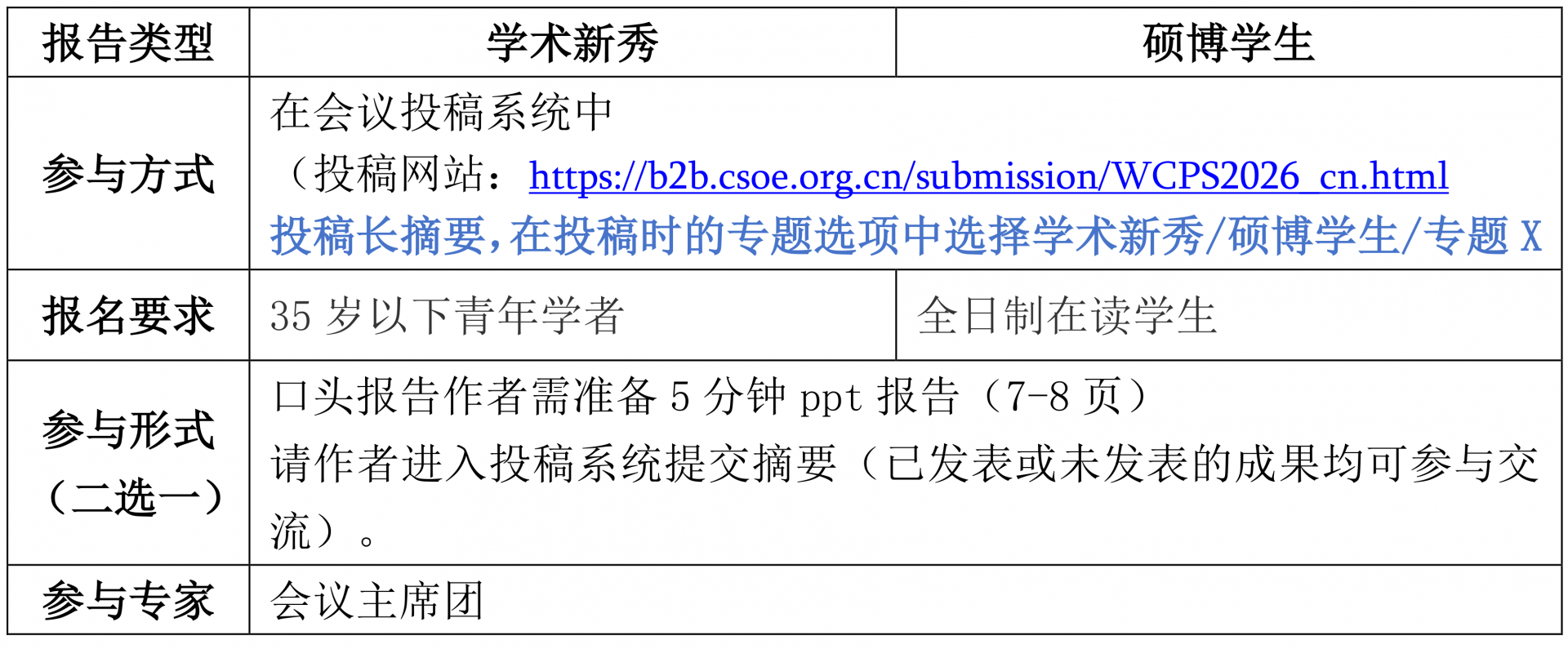
Authors are requested to log in to the submission website and submit an English abstract of no more than 500 words. The organizing committee will arrange for the Academic Committee to review the abstracts and notify the authors of the acceptance decision by email. Based on paper quality, accepted manuscripts will be recommended for publication in the relevant journals or in the conference proceedings. Acceptance notifications will be issued in the order in which abstracts are submitted.
Poster Requirements:
Poster size: 90 cm (height) × 80 cm (width). Posters should be printed in color with self-adhesive backing, and the manuscript ID must be indicated on the poster. Please refer to the attached poster template (Poster Template 80 cm × 90 cm .pptx). Authors are requested to bring their printed posters to the conference venue.
During submission, authors should provide the contact information of the submitting author (first author).
Participants may attend purely for academic exchange without submitting a full paper, and attendance based on an accepted abstract alone is supported.
Abstract submission website: https://b2b.csoe.org.cn/submission/WCPS2026_cn.html
First-round abstract submission deadline: October 20, 2026
V. Registration Instructions
All interested participants are welcome to register, regardless of whether they have submitted an abstract. Please complete your conference registration at the following website:
https://b2b.csoe.org.cn/registration/WCPS2026_cn.html
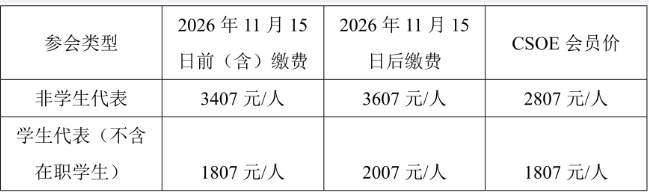
Registration Fees
|
Participant Category
|
Paid on or before Oct 31, 2026
|
Paid after Oct 31, 2026
|
CSOE Member Rate
|
|
Non-student delegate
|
CNY 3,407 / person
|
CNY 3,607 / person
|
CNY 2,807 / person
|
|
Student delegate (excluding part-time students)
|
CNY 1,807 / person
|
CNY 2,007 / person
|
CNY 1,807 / person
|
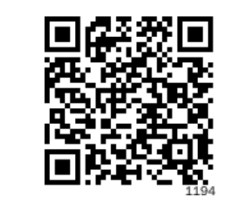
To enjoy the CSOE member rate, please scan the QR code to join the Chinese Society for Optical Engineering (CSOE), complete your personal information and pay the membership fee.
Registration fees cover the conference kit, proceedings, conference guide, sundry expenses and taxes. They do not include paper publication charges or accommodation expenses. The paper publication fee is CNY 2,500 per manuscript, and no more than two manuscripts are allowed for the same first author.
Payment Methods
1. Online payment: after completing registration, you will be directed to the online payment page; select “Alipay” to complete the payment online.
2. Bank transfer: Bank: Industrial and Commercial Bank of China, Beijing Science Park Sub-branch; Account name: Chinese Society for Optical Engineering; Account No.: 0200296409200177730. When making the transfer, authors should specify “Name + Manuscript ID” and non-authors should specify “WCPS + Name” for verification purposes. Official conference invoices will be provided.
Refund Policy
A full refund is available for cancellations made at least 2 weeks (14 days) before the conference. No refund will be provided within 14 days of the conference, as conference costs will already have been incurred.
Invoices
Conference registration invoices will be processed in two batches: two weeks before and two weeks after the conference.
Organizing Committee Contacts
LI (Abstract & Registration): +86-10-83602780
QU (Abstract & Registration): +86-22-29278358; qujie@csoe.org.cn
WAN (Abstract & Registration): +86-10-83368132; wankuan@csoe.org.cn
CHEN (Parallel Events): +86-18611889864
ZHANG (Parallel Events): +86-13911650484
CHAI (Parallel Events): +86-15958108449
GUO (Parallel Events): +86-18710157604
QI (Parallel Events): +86-18610155222
ZHANG (Parallel Events): +86-15122191442


 2026中国国际西部光电子大会邀请函.pdf
