Computational Imaging& Achievements Exhibition & Presentation Session
The "6th International Conference on Computational Imaging", will be held in Shenzhen from September 11th to 13th, 2026. t is hoped that through the communication between the two parties, the integrated development of fields such as imaging will be promoted. It will focus on the development progress of computational imaging technology, as well as the urgent challenges currently faced. Taking this opportunity, the "Exhibition of Computational Imaging Achievements" will be held concurrently, aiming to comprehensively review and showcase the academic achievements of computational imaging technology, as well as the development of theories, technologies, and products related to the industrial chain. It is hoped that through this event, the weak links in its ecosystem will be revealed, providing strong support for the future development direction, and better promoting the development of computational imaging and technology themselves, as well as its applications in multiple fields.
This achievement exhibition will be divided into categories of "Advanced Devices, Innovative Algorithms, System Design, and Application Products" according to the entire industrial chain of computational imaging. The achievements from September 2025 to August 2026 will be show cased. This achievement exhibition mainly targets teams with independent research and development capabilities. According to the applying units, it will be collected through two channels: "academic" and "industrial". Universities, scientific research institutions can submit achievement information through the "academic channel", and enterprises can submit achievement information through the "industrial channel". Each team can submit no more than two achievements.
Teams interested in participating are requested to scan the QR code or click the link to fill in the application form for the "Exhibition of Computational Imaging Achievements" and then submit it.
(Please scan the QR code to download the relevant documents.)

Deadline: 30th July
Registration Website(English):https://b2b.csoe.org.cn/submission/CITA2026_en.html
1.Conference Fee
Student conference fee(CSOE Member):1802yuan
Student conference fee:1802yuan(Early Bird before 11th August)&
General conference fee:3402yuan(Early Bird before 11th August)&3602yuan
2.Become member(加入学会会员 享受会议优惠价)
https://b2b.csoe.org.cn/member/invite.php?user=baiyu&goto=account

点击链接,扫描二维码填写信息,完成支付,成为会员,并自动生成会员证书。
3.Payment Type(Please note your name and unit when you pay):
1)Remittance transfer
Name & Address:CHINESE SOCIETY FOR OPTICAL ENGINEERING(中国光学工程学会)/NO.1 BLDG HAIYING ROAD FENGTAI DISTRICT BEIJING CHINA
Number:0200296409200177730
Account Opening Bank:Industrial and Commercial Bank of China Limited Beijing Science and Technology Park Sub-branch(中国工商银行股份有限公司北京科技园支行)
Bank Number:102100029646
Corporate Organization Code:71784043-7
SWIFT CODE:ICBKCNBJBJM
2)Online Payment
After registration, you can jump to the online payment page, choose "Alipay" to complete the payment online
4.Conference Registration Fee Refund
The registration fee can be refunded in full 2 weeks (14 days) before the meeting, and refunds will no longer be supported for meeting costs incurred over 2 weeks
5.Conference Registration Fee Invoice
After successful registration and payment, log in to the registration website again to apply for an invoice and issue it independently.(自助申请开票)
Attention:
1.The payment before 11th August will enjoy the preferential price,and the original price will be restored after that
2.Please complete rhe refund before 5th September
3.CSOE membership benefits are for members of the Chinese Society for Optical Engineering whose membership cards are valid
The Proceedings of this conference will bepublished in the SPIE Digital Library withover 450,000 papers from other outstanding conferences and SPIE Journals and books from SPIE Press.
Supported Journals
PhotoniX (SCI)
Infrared and Laser Engineering (EI)
PhotoniX Life
PhotoniX Synergy
Opto-Electronic Advances( SCI)
Photonic Sensors(SCI)
Journal of Infrared and Millimeter Waves (SCI)
Optical Precision Engineering (EI)
Acta Photonica Sinica (EI)
Journal of Semiconductors (EI)
Chinese Optics(EI)
海报模板:  CITA-Poster-Template-80cmx80cm .pptx
提前通过邮件提交的电子版海报已经制作好并在会场3楼序厅集中展示(目前统一安排9月13日中午 13:00-13:30分有统一海报交流时间)
其他会议时间皆会展示,不设置专门交流时间。
现场制作好带过来的海报,请于注册时交给注册的工作人员,会帮助粘贴
Please submit a 300-500 words abstract in English for technical review purposes that is suitable for publication. If accepted, the contact author will receive notification of acceptance by email. Before you submit the abstract, Please refer to the following examples.
For submissions to SPIE for publication or communication, only an abstract is required. For submissions to other corresponding journals, please select and submit the full text (in Chinese or English, depending on the journal's nature)
Download abstract template:
Abstract submission deadline: 30h August 2026 (The Last Round,仅支持报告专场与海报粘贴交流)
·Physical Modeling and Information Theory of Imaging Systems
·Optical Transfer Function Theory
·Optical Information Theory and Signal Processing
·Inverse Problem Solving and Optimization Algorithms
·System Performance Evaluation Methods and Standards
·Computational Imaging and Deep Learning Theory
Chairs:
Qunbo Lv, Beijing University of Technology
Baoqing Sun, Shandong University
Co-chairs:
Ni Chen, The University of Hong Kong
Rui Chen, Sun Yat-sen University
Xiang Hao, Zhejiang University
Zhen Ma, Xi'an Institute of Optics and Precision Mechanics, Chinese Academy of Sciences
An Pan, Xi'an Institute of Optics and Precision Mechanics, Chinese Academy of Sciences
Duyang Zang, Northwestern Polytechnical University
TPC Member:
Sha An, Xidian University
Dan Dan, Xi'an Institute of Optics and Precision Mechanics, Chinese Academy of Sciences
Juanjuan Jing, China University of Geosciences Beijing
Yuxing Li, The University of Hong Kong
Zhenbo Ren, Northwestern Polytechnical University
Jiwei Zhang, Northwestern Polytechnical University
Wei Zhao, Northwest University
Topic Secretary:
Xin Liu, The University of Hong Kong
Topic 2: Non-Line-of-Sight and Scattering Imaging
· Complex Medium Light Transmission Control Technologies
· Imaging through Scattering Media
· Non-Line-of-Sight (NLOS) Imaging and Looking Around the Corner
· Adaptive Optics and Wavefront Shaping
· Time-Reversal Imaging
Chairs:
Puxiang Lai, The Hong Kong Polytechnic University
Xin Jin, Tsinghua Shenzhen International Graduate School
Co-chairs:
Ziyang Chen, Huaqiao University
Lei Gong, University of Science and Technology of China
Jing Han, Nanjing University of Science and Technology
Tengfei Wu, Xi'an Institute of Optics and Precision Mechanics, Chinese Academy of Sciences
TPC Member:
Chengfei Guo, Xidian University Hangzhou Research Institute
Tianyue Li, The Hong Kong University of Science and Technology
Honglin Liu, Shanghai Institute of Optics and Fine Mechanics, Chinese Academy of Sciences
Yikun Liu, Sun Yat-sen University
Yuecheng Shen, East China Normal University
Sha Wang, Sichuan University
Dong Wang, Taiyuan University of Technology
Xiaoyu Weng, Shenzhen University
Yi Xu, Guangdong University of Technology
Meiling Zhou, Xi'an Institute of Optics and Precision Mechanics, Chinese Academy of Sciences
Topic Secretary:
Haoran Li, The Hong Kong Polytechnic University
Flagship Topic 3 :
1) 3D imaging and measurement
·Structured light 3D imaging
·Fringe/speckle projection profilometry
·Photogrammetry
·Photometric stereo vision
·Time of Flight (ToF) imaging
·LiDAR
·Digital Image Correlation (DIC)
·Shape from Defocus
·Phase Measurement Deflectometry
·Rapid 3D imaging technology
·Integrated imaging
·Light Field 3D Imaging
·Deep Learning-based 3D imaging technology
·3D Imaging and Sensing Technology with Computational Imaging in Interdisciplinary Fields
2)3D vision
·3D sensing
·Stereoscopic vison
·3D modeling
·3D visual perception and edge computing
·3D data semantic segmentation and understanding
·3D data processing, storing and transmission
·Hardware, algorithm, and techniques relating to 3D vision
3) 3D display
·Digital holography
·Naked eye 3D display
·Integrated light field display
·Volumetric 3D display
·Virtual reality/augmented reality/mixed reality
·Hardware, algorithm, and techniques relating to 3D display
Topic 4: Polarization Imaging and Event Imaging
· Polarization Parameter Measurement and Calibration
· Polarization-Gated Imaging
· Polarization 3D Imaging
· Polarization Biological Microscopy
· Polarization Target Detection and Recognition
· Polarization Dehazing/Underwater Imaging
· Neuromorphic Imaging and Sensing
· Event-Driven Computational Imaging
Chairs:
Fei Liu, Xidian University
Shuming Wang, Nanjing University
Yongqiang Zhao, Northwestern Polytechnical University
Co-chairs:
Honghui He, Tsinghua Shenzhen International Graduate School
Xuan Li, Xidian University
Junchao Zhang, Central South University
TPC Member:
Boyan Fu, The University of Hong Kong
Haofeng Hu, Tianjin University
Ning Li, Zhengzhou University
Jinli Suo, Tsinghua University
Zhenhua Wan, Guangxi University
Meng Xiang, Xidian University
Yue Yao, Shenzhen Technology University
Xiangyue Zhang, Northeastern University
Topic Secretary:
Rongrong Guan, Xidian University
Topic 5: Holography and Phase Imaging
· Holographic Interferometric Measurement
· Digital Holography Technology
· Holographic Microscopy
· Quantitative Phase Imaging
· Coherent Diffraction Imaging
· Lensless Imaging
· Iterative Phase Recovery
· Light Intensity Transfer Equation
· Layered Imaging
· Fourier Layered Imaging
· Tomographic 3D Measurement
· Optical Diffraction Tomography
· Coherence Measurement
Chairs:
Liangcai Cao, Tsinghua University
Xiaodi Tan, Fujian Normal University
Chao Zuo, Nanjing University of Science and Technology
Guoan Zheng, University of Connecticut
Edmund Lam, University of Hongkong
Co-chairs:
Jianglei Di, Guangdong University of Technology
Ping Su, Tsinghua Shenzhen International Graduate School
Di Wang, Beihang University
Jiamiao Yang, Shanghai Jiao Tong University
TPC Member:
Zehao He, Capital Normal University
Yi-Long Li, Beihang University
Linxian Liu, Shanxi University
Junwei Min, Xi'an Institute of Optics and Precision Mechanics, Chinese Academy of Sciences
Rongjun Shao, Shanghai Jiao Tong University
Jiasong Sun, Nanjing University of Science and Technology
Jiazhang Wang, University of Arizona
Xingpeng Yan, Army Arms University of PLA
Xunbo Yu, Beijing University of Posts and Telecommunications
Renjie Zhou, The Chinese University of Hong Kong
Topic Secretary:
Qian Shen, Nanjing University of Science and Technology
Report:
Piotr Zdańkowski, Warsaw University of Technology —— A Pathway to On-Chip Computational Microscopy via Near-Field Micro-LED Displays, Keynote
Feng Pan, Beihang University —— Digital Holographic Flow Cytometry: Label-Free 3D Quantitative Phase Tomography and Smart Cell Classification, Invited
Jiazhang Wang, University of Arizona —— Computational 3D Imaging for Reflective Surfaces, Invited
Wenbo Wan, Nanchang University —— Breaking the Physical Constraints of Lensless Imaging: A Generative AI Approach to Artifact Suppression and Signal Recovery, Invited
Caojin Yuan, Nanjing Normal University —— Three-dimensional particle localization technology based on illumination modulation, Invited
Liyun Zhong, Guangdong University of Technology —— TBD, Invited
Renjie Zhou, The Chinese University of Hong Kong —— Coherence-gated Diffraction Tomography for In Vivo Imaging, Keynote
Chao Zuo, Nanjing University of Science and Technology —— TBD, Keynote
Topic 6: Multiband and Spectral Imaging
· Infrared/Low-Light-Level Computational Imaging
· Visible/Infrared Image Multimodal Fusion
· Terahertz Computational Imaging
· Microwave/X-ray Computational Imaging
· Aperture Coding Imaging
· Wavefront Coding Imaging
· Synthetic Aperture Imaging
· Computational Multi/High/Hyper-Spectral Imaging Technologies
· Advanced Spectrometer Design
· Spectral Data Processing and Analysis
Chairs:
Xun Cao, Nanjing University
Qianqian Wang, Beijing Institute of Technology
Co-chairs:
Liheng Bian, Beijing Institute of Technology
Renwei Dian, Hunan University
Kai Ni, Tsinghua Shenzhen International Graduate School
Zongyin Yang, Zhejiang University
Yongping Zhai, National University of Defense Technology
TPC Member:
Xudong Kang, Hunan University
Hui Li, Wuhan Institute of Technology
Jinpeng Liu, Xidian University
Xiangyun Ma, Nankai University
Geer Teng, University of Oxford
Zhongyang Xing, National University of Defense Technology
Haoyang Yu,Central South University
You Zhou, Nanjing University
Topic Secretary:
Yin Cheng, Beijing Institute of Technology
Topic 7: Single-Photon/Single-Pixel/Quantum Imaging
· Single-Photon Detection Technology
· Fundamental Theory of Correlated Imaging
· Computational Correlated Imaging
· Single-Pixel Imaging
· Quantum Correlated Imaging
· Quantum Tomography Techniques
· Quantum-Enhanced Sensing
Chairs:
Chenfei Jin, Harbin Institute of Technology
Weitao Liu, National University of Defense Technology
Co-chairs:
Lixiang Chen, Xiamen University
Zihan Geng, Tsinghua ShenzhenInternational Graduate School
Zhong Ji, Xidian University
Jun Ke, Beijing Institute of Technology
Jianhong Shi, Shanghai Jiao Tong University
Xueshun Shi, The 41st Research Institute of CETC
TPC Member:
Xiaolong Hu, Zhejiang University
Shuming Jiao, Great Bay University
Zhentao Liu, Shanghai Institute of Optics and Fine Mechanics, Chinese Academy of Sciences
Dongfeng Shi, Anhui Institute of Optics and Fine Mechanics, Chinese Academy of Sciences
Shuai Sun, National University of Defense Technology
Quanchun Yu, National Key Laboratory of Scattering and Radiation
Yuanjin Yu, Beijing Institute of Technology
Wuhong Zhang, Xiamen University
Topic Secretary:
Zhenwu Nie, National University of Defense Technology
Jie Yang, Harbin Institute of Technology
Topic 8: Micro/Nano-Optics Computational Imaging
· Multidimensional Light Field Control Based on Micro/Nano-Optics
· Diffraction Optics and Computational Imaging
· Metasurfaces and Metaphotonics
· Computational Imaging Based on Artificial Nano/Micro Structures
· Liquid Lenses and Computational Imaging
· Planar Optical Element Design
· Photoelectronic Integrated Imaging Chips
Chairs:
Din Ping Tsai, City University of Hong Kong
Tao Li, Nanjing University
Co-chairs:
Mu Ku Chen, City University of Hong Kong
Lingling Huang, Beijing Institute of Technology
Lei Li, Sichuan University
Xiangping Li, National University of Defense Technology
Yuanmu Yang, Tsinghua University
Cheng Zhang, Huazhong University of Science and Technology
Qian Zhou, Tsinghua Shenzhen International Graduate School, Tsinghua University
TPC Member:
Yueqiang Hu, Hunan University
Guixin Li, Southern University of Science and Technology
Haowen Liang, Sun Yat-sen University
Shubin Liu, Fuzhou University
Lihui Wang, Soochow University
Zhipeng Yu, Jinan University
Fei Zhang, Institute of Optics and Electronics, Chinese Academy of Sciences
Topic Secretary:
Shanshan Hu, Nanjing University
Topic 9: Biomedical Optical Imaging
· Super-Resolution Microscopy
· Deep-Penetration Microscopy
· Label-Free Microscopy
· Large-Field High-Resolution Mesoscopic Imaging
· Ultrasound/Photoacoustic/Thermal/X-ray Imaging
· Optical Manipulation and Optical Tweezers
· Optical Coherence Tomography
· Optical Tomography
· Magnetic Resonance Imaging
· Wearable/Interventional Imaging
· Cross-Blood-Brain-Barrier Neuroimaging
· Single-Molecule Localization and Dynamic Tracking· Intelligent Surgical Navigation Imaging
Chairs:
Baoli Yao, Xi'an Institute of Optics and Precision Mechanics, Chinese Academy of Sciences
Liwei Liu, Shenzhen University
Minbiao Ji, Fudan University
Xibin Yang, Suzhou Institute of Biomedical Engineering and Technology, Chinese Academy of Sciences
Co-chairs:
Lingjie Kong, Tsinghua University
Haoyu Li, Harbin Institute of Technology
Yuzhi Shi, Shanghai Eye Diseases Prevention & Treatment Center/Shanghai Eye Hospital
Fan Wang, Beihang University
Qing Yang, Zhejiang University
TPC Member:
Jiajie Chen, Shenzhen University
Zhenyue Chen, Tongji University
Lei Ding, Harbin Institute of Technology
Dongyu Li, Huazhong University of Science and Technology
Xuchen Shan, Beihang University
Zhong Wen, Zhejiang University
Topic Secretary:
Shiqi Wang, Shenzhen University
Liming Yang, Xi'an Institute of Optics and Precision Mechanics, Chinese Academy of Sciences
Topic 10 (Special Topic): AI + Computational Imaging
· Data-Driven Computational Imaging Technology
· Physics-Driven Computational Imaging Technology
· Optical Neural Networks and Optical Computing
· Optical Computing and Photonic Chips
· Computational Imaging Supported by Big Data and Large Models
· Research on New Paradigms of Computational Imaging
Chairs:
David Brady, University of Arizona
Xiaopeng Shao, Xi’an Institute of Optics and Precision Mechanics, Chinese Academy of Sciences
Qiming Zhang, University of Shanghai for Science and Technology
Xin Yuan, Westlake University
Co-chairs:
Kaichen Dong, Tsinghua Shenzhen International Graduate School, Tsinghua University
Xiong Dun, Tongji University
Jiachen Wu, Zhejiang University
Teli Xi, Xidian University
TPC Member:
Yating Chen, Fuzhou University
Jiazhen Dou, Guangdong University of Technology
Mingxu Piao, Changchun University of Science and Technology
Xinxing Xia, Shanghai University
Yaokun Xu, National University of Defense Technology
Xiaoyun Yuan, Shanghai Jiao Tong University
Nan Zhang, Beijing Institute of Technology
Topic Secretary:
Linchu Jiang, Westlake University
Topic 11 (Special Topic): Extreme Challenges in Computational Imaging
· Ultrafast Computational Optical Imaging
· Ultraspeed Transient Imaging and Testing
· Microscale Computational Imaging
· Passive Super-Resolution Imaging Detection
· Turbid Underwater Imaging Compensation
· Strong Scattering Media Imaging
· Long-Distance Target Imaging and Detection
· Large-Scale Target Imaging and Measurement
· Imaging in Strong Scattering Media
· Multiphysical Field Fusion Imaging
· Multisystem/Multiple Array Collaborative Imaging
· Multisource Platform Data Processing and Fusion
· Computational Imaging-Communication Joint Optimization
· Distributed/Edge Intelligent Imaging Systems
Chairs:
Leili Hu, Luoyang Institute of Electro-Optical Equipment
Xuelong Li, Institute of Artificial Intelligence of China Telecom (TeleAI)
Jinyang Liang, Institut National de la Recherche Scientifique, Université du Québec
Co-chairs:
Xuemin Cheng, Tsinghua Shenzhen International Graduate School
Baolin Du, Luoyang Institute of Electro-Optical Equipment
Jingdan Liu, Shanghai Institute of Optics and Fine Mechanics, Chinese Academy of Sciences
Junfei Shen, Sichuan University
Zhe Sun, Northwestern Polytechnical University
Hushan Wang, Xi'an Institute of Optics and Precision Mechanics, Chinese Academy of Sciences
TPC Members:
Chen Bai, Xi'an Institute of Optics and Precision Mechanics, Chinese Academy of Sciences
Yifan Chen, Institute of Artificial Intelligence of China Telecom (TeleAI)
Jiadong Fan, ShanghaiTech University
Ruixu Geng,The University of Hong Kong
Dalong Qi, East China Normal University
Lindong Shang, Luoyang Institute of Electro-Optical Equipment
Xiaoru Yang, Luoyang Institute of Electro-Optical Equipment
Chongyang Zhang, Sichuan University
Topic Secretaries:
Yushi Fu, Shanghai Institute of Optics and Fine Mechanics, Chinese Academy of Sciences
Report:
Xianping Fu, Dalian Maritime University —— Research on Multi-modal Perception Technology for Underwater Robots, Keynote
Yunhui Gao, Tsinghua University —— Computational wavefront sensing for complex optical fields, Invited
Ruixu Geng, The University of Hong Kong —— Vision-RF Imaging and Sensing for Occluded Scenes, Invited
Jie Guo, Hefei Zhongke Junda Shijie Technology Co., Ltd. —— Computational Imaging and Intelligent Full-Field Parameter Inversion for High-Speed Dynamic Processes, Invited
Kun Huang, East China Normal University —— Mid-infrared upconversion computational imaging, Keynote
Cheng Jiang, Institut National de la Recherche Scientifique, Université du Québec —— Single-pixel infrared imaging thermometry for human inner canthi temperature mapping, Invited
Chunqi Jin, Jilin University —— Intelligent Multidimensional Optical Information Sensing with Nanophotonics, Invited
Zhengyan Li, Huazhong University of Science and Technology —— Single-shot 3D spectral imaging of polarization states and its applications, Keynote
Yu Lu, Xi'an Jiaotong University —— Active Compressed Ultrafast Imaging Based on Spectral-temporal Transform, Invited
Du Wang, Wuhan University —— Ultrafast Imaging for Flow Velocimetry Based on Femtosecond Laser Time–Frequency–Space Mapping, Invited
Xuming Zhang, The Hong Kong Polytechnic University —— Image reconstruction in artificial compound eyes, Keynote
Ping Zhu, Shanghai Institute of Optics and Fine Mechanics, Chinese Academy of Sciences —— Single-Shot Full-Domain Characterization of Spatiotemporal Laser Pulses, Invited
Computational imaging has emerged as a cutting-edge and highly active research frontier in the field of optoelectronics both domestically and internationally. It holds extensive application potential and demand in areas such as autonomous vehicle navigation, industrial production and inspection, life sciences and healthcare, and national defense security. To strengthen academic exchanges, broaden research perspectives, promote the collaborative development of related disciplines and industries, and enhance the global influence of computational imaging technology research in China, the Chinese Society For Optical Engineering, in collaboration with leading domestic institutions in the field of computational imaging, is organizing "the 6th International Conference on Computational Imaging (CITA2026)". This conference will bring together experts from around the world to delve into the latest advancements, technical challenges, and future trends in the fundamental theories, systems, technologies, devices, computational processing, and applications of computational imaging. CITA aims to become the premier international academic event in the field of computational imaging, offering the largest scale, highest level, and most comprehensive content. This conference is an international event, and we warmly welcome researchers and industry professionals from related fields both domestically and abroad to actively submit papers and participate in the conference.
 Songlin Zhuang (Chinese Academy of Engineering, China) |
 Min Gu (Chinese Academy of Engineering, China) |
 Jianyu Wang (Chinese Academy of Science, China) |
 David Brady (University of Arizona, USA) |
 Qian Chen (North University of China) |
 Huijie Zhao (Beihang University) |
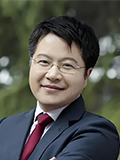 Liangcai Cao (Tsinghua University) |
 Xiaopeng Shao (Xi'an Institute of Optics and Precision Mechanics of CAS) |
 Xiaodi Tan (Fujian Normal University) |
 Xueqian Wang (Tsinghua Shenzhen International Graduate School) |
 Qian Zhou (Tsinghua Shenzhen International Graduate School) |
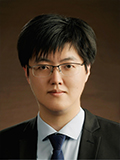 Chao Zuo (Nanjing University of Science Technology, China) |
Relevant enterprises in the industry are invited to gather for exhibition and communication. The invitation scope includes chips (GPU, FPGA, ASIC), basic hardware (light sources, lenses, industrial 3D cameras, image acquisition cards, DLP devices, lasers, image processing units, visual processing software), cloud computing, data centers, industry solutions, etc.
Head of the Exhibition Department (Enterprise Participation in Exhibitions, Sponsorship)
Contact:
Rongpeng E, China
Tel: 13001030561
Sheng Guo, China
Tel: 18710157604
Special Sessions for Young Scholars and Master and Doctoral Students
In order to further strengthen the construction of the young talent team, stimulate the scientific research enthusiasm of young scholars, and support and encourage the growth of young scholars at all levels, this conference is jointly organized by various topics. Special sessions for young scholars' reports will be held during the conference, and participation certificates will be issued. Excellent reports will be selected and awarded certificates. The specific holding time and arrangements of the special sessions will be notified separately. Young scholars are warmly welcome to actively submit contributions and sign up to participate.
一、Young Scholars
1.Participation Method: Submit an extended abstract in the conference submission system. When submitting, select "Young Scholars " in the topic options. Submission website:https://b2b.csoe.org.cn/submission/CITA2026_cn.html
2. Eligibility Requirements: Young scholars under 35 years old
3. Report Time: 8 minutes.
4. Review Experts: Experts from each topic; Professional committee members of the special committee.
二、Master and Doctoral Students
1. Participation Method: Choose either to participate in the special session for "Master and Doctoral Students ".
2. Eligibility Requirements: Currently enrolled full-time students.
3. Report Time: 5 minutes.
4. Review Experts: Experts from each topic; Professional committee members of the special committee.
*Note:
1.Young scholars can register for both the special session of young scholars' reports and the oral reports of topic simultaneously. Requirement: The report contents for the two scenarios need different. Please indicate the participation content when submitting, and prepare according to the specific requirements of the special session and the topics respectively.

